
Why Choose WIX Studio for Hotels Vacation Homes and Real Estate Websites
A hotel website has about three seconds to make someone think, “Ooh, I could stay there,” before they wander off to compare breakfast photos somewhere else. Real estate is no kinder. If the photos look flat, the pages load like a sleepy lift, or the enquiry form feels like paperwork from 2009, people bounce.
So, Why choose WIX Studio when there are so many website builders shouting for attention? Short answer: it gives you a lot of design freedom without making you live in a cave with a handbook and a panic lamp.
It’s especially interesting for hotels, vacation homes, property managers and real estate businesses because these websites need to do more than look pretty. They need to show spaces clearly, build trust fast, collect enquiries and make visitors feel confident enough to book, call, or ask for a viewing.

What WIX Studio is best at
WIX Studio is a website-building platform made for people who want strong visual control without building everything from scratch. Think of it as a nicely stocked kitchen. You still need taste, but you don’t have to forge your own frying pan.
For property and hospitality websites, that matters. These sites are visual by nature. People want to see the sea view, the bathroom, the bed, the kitchen, the garden, the lobby, the street, the floor plan and, yes, whether the sofa looks suspiciously crunchy.
WIX Studio works well for:
Boutique hotels and guest houses
Serviced apartments and vacation homes
Small to mid-sized property management companies
Real estate agencies with curated listings
Developers showing new-build homes or rental schemes
It’s less ideal if the website needs a very complex booking setup, a huge constantly changing property database, or deep links with internal company systems. More on that shortly, because every platform has a “don’t make me do that” face.
How it performs for hotels
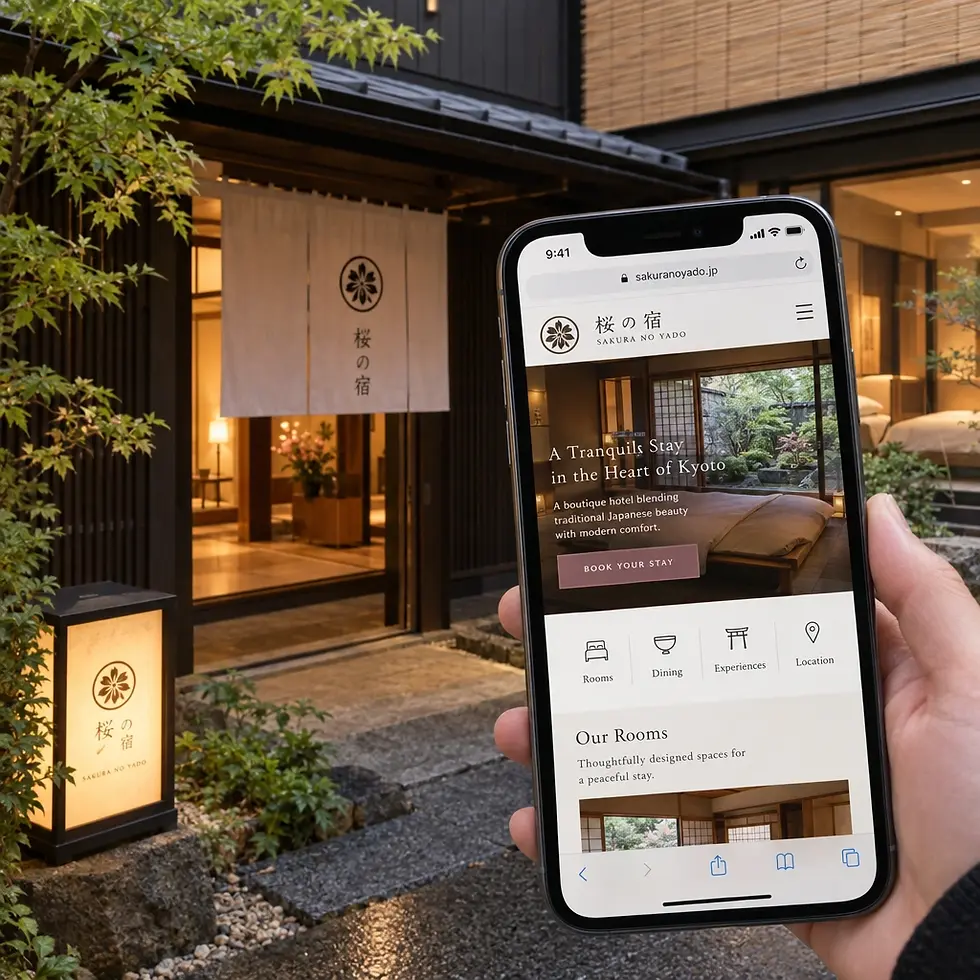
For hotels, WIX Studio’s biggest win is presentation. Room pages can look polished, photo-led and easy to browse. You can create pages for:
Rooms and suites
Food and drink
Weddings and events
Local attractions
Special offers
Contact and enquiry forms
The design tools make it easier to create a site that feels like the property. A luxury country hotel can feel calm and elegant. A beach hotel can feel bright and breezy. A city stay can feel sharp and practical.
The catch is bookings. WIX Studio can support booking-style journeys, forms and connected tools, but a hotel with complex room rates, seasonal pricing, add-ons and live availability may need extra setup. If your booking rules are simple, you’ll likely be fine. If your pricing sheet looks like a wizard’s tax return, plan carefully.
How it performs for vacation homes
Vacation homes, or holiday lets if we’re keeping it nicely British, are a great fit when the site focuses on a small collection of properties.
Each home can have its own page with:
Large image galleries
Key features
Guest capacity
Location notes
House rules
Enquiry forms
Nearby things to do
This is where WIX Studio feels friendly. You can create a warm, story-led page instead of a cold listing. That helps because people booking a holiday home are buying a mood as much as a mattress count.
The drawback comes with calendars, availability and payments. If the site needs real-time booking across many homes, you’ll probably need extra connected tools. That can work, but it does add moving parts. And moving parts, like toddlers near full mugs, need supervision.
How it performs for property management
Property management websites need trust. They often serve different audiences at once: owners, tenants, guests, landlords, buyers or investors. That can get messy fast.
WIX Studio helps by letting you create clear sections for each audience. For example:
Owner services
Tenant information
Guest support
Maintenance request forms
Managed property examples
Contact pages for different needs
The platform is good for making these routes feel simple. Someone should land on the site and know where to go without playing “Where’s Wally?” with the menu.
The main limitation is scale. If the business manages hundreds of properties with frequent updates, WIX Studio can still work, but the content needs a tidy structure from the start. Without that, the site can become a digital cupboard full of mystery cables.
How it performs for real estate
Real estate websites need clarity, speed and strong property pages. WIX Studio can handle attractive listing pages with images, descriptions, enquiry buttons and area guides.
It’s especially strong for agencies that care about presentation. A home can be shown with proper breathing room, not crammed into a page like luggage in a budget airline overhead locker.
Good uses include:
Featured properties
Neighbourhood guides
New development pages
Agent profiles
Valuation request forms
Buyer and seller guides
The challenge is live listing management. If listings change daily, or if the site needs to sync with outside property feeds, you’ll need to check what setup is possible before committing. For smaller portfolios or hand-picked listings, WIX Studio is much easier to live with.
The honest pros and cons
Here’s my honest opinion when using WIX Studio, in relation to hotels, vacation homes, property management and real estate businesses.
Pros
Strong visual design control, which is great for photo-led property websites.
Good for creating polished pages without starting from zero.
Works well for small and mid-sized property collections.
Easy to build clear enquiry paths for guests, buyers, owners or tenants.
Useful for making pages look good on phones, tablets and laptops.
Cons
Too much freedom can lead to clutter if there’s no clear design plan.
Very complex booking or listing needs may require extra tools.
Large inventories need careful planning to avoid messy content.
Moving away later can mean rebuilding much of the site elsewhere.
Image-heavy sites need care so they don’t feel slow.
The biggest strengths
The best thing about WIX Studio is that it lets a property website feel designed, not assembled in a rush between two phone calls and a cold coffee.
Its strengths are clear:
Design flexibility
You can create pages with personality. For hospitality and property, that’s huge. A plain site can make even a lovely place feel forgettable.
Good page structure
You can build clear journeys for different visitors. Guests can find rooms. Buyers can find properties. Owners can find management services. Nobody needs a treasure map.
Speed of creation
Compared with a fully custom website build, WIX Studio can be quicker to launch. That’s useful when a new property is ready, a season is coming, or the old site looks like it still listens to dial-up internet.
Easy updates
Changing photos, text, offers and pages is fairly approachable. That matters because property details change all the time.
The biggest drawbacks
No platform gets a gold star for everything.
The biggest weakness is complexity. If the site needs advanced booking rules, live availability across many units, detailed owner portals, or automatic property updates from other systems, WIX Studio may need add-ons or workarounds.
There’s also the design trap. Because WIX Studio gives lots of control, it’s easy to overdo it. Too many animations, oversized photos, mixed fonts and random page layouts can make the site feel chaotic. Like a hotel breakfast buffet where someone put sausages next to the fruit salad. Technically possible, emotionally confusing.
The other concern is long-term fit. If the business grows from five properties to five hundred, the original setup may need rethinking. That’s not a deal-breaker, but it’s worth planning before the site becomes the online version of a junk drawer.
Verdict
Wix Studio can be a strong choice for hotels, holiday rentals, property management companies and real estate businesses looking for a thoughtfully designed website that’s easy to manage.
It works well for telling a property’s story, presenting listings, explaining services and helping visitors enquire or reach a booking page. More complex requirements—such as live property data or specialised booking functions—need a closer look at the systems involved and how they’ll work together.
For many hospitality and property businesses, the priority is a website that looks good, makes information easy to find and stays manageable as the business grows.
A good website should feel like a helpful host, with clear directions and a welcoming introduction. Visitors shouldn’t have to hunt for the information they need—or the button that lets them book.
That’s where a designer comes in: understanding the business, choosing what belongs on the site and bringing it together in a way that works for both visitors and the people managing it.